Costa Rica’s 5 Most Photogenic Birds
Discover where and when to photograph Costa Rica’s most spectacular birds with insider tips from Aratinga Tours.
Costa Rica: A Dream Destination for Bird Photography
Costa Rica is one of the world’s top destinations for bird photography, offering incredible diversity within a remarkably small country. From dazzling hummingbirds to iconic quetzals and powerful rainforest raptors, every region offers unique photographic opportunities.
Here are five of our favorite photogenic bird species — along with insider tips from the Aratinga Tours team on where and when to find them.
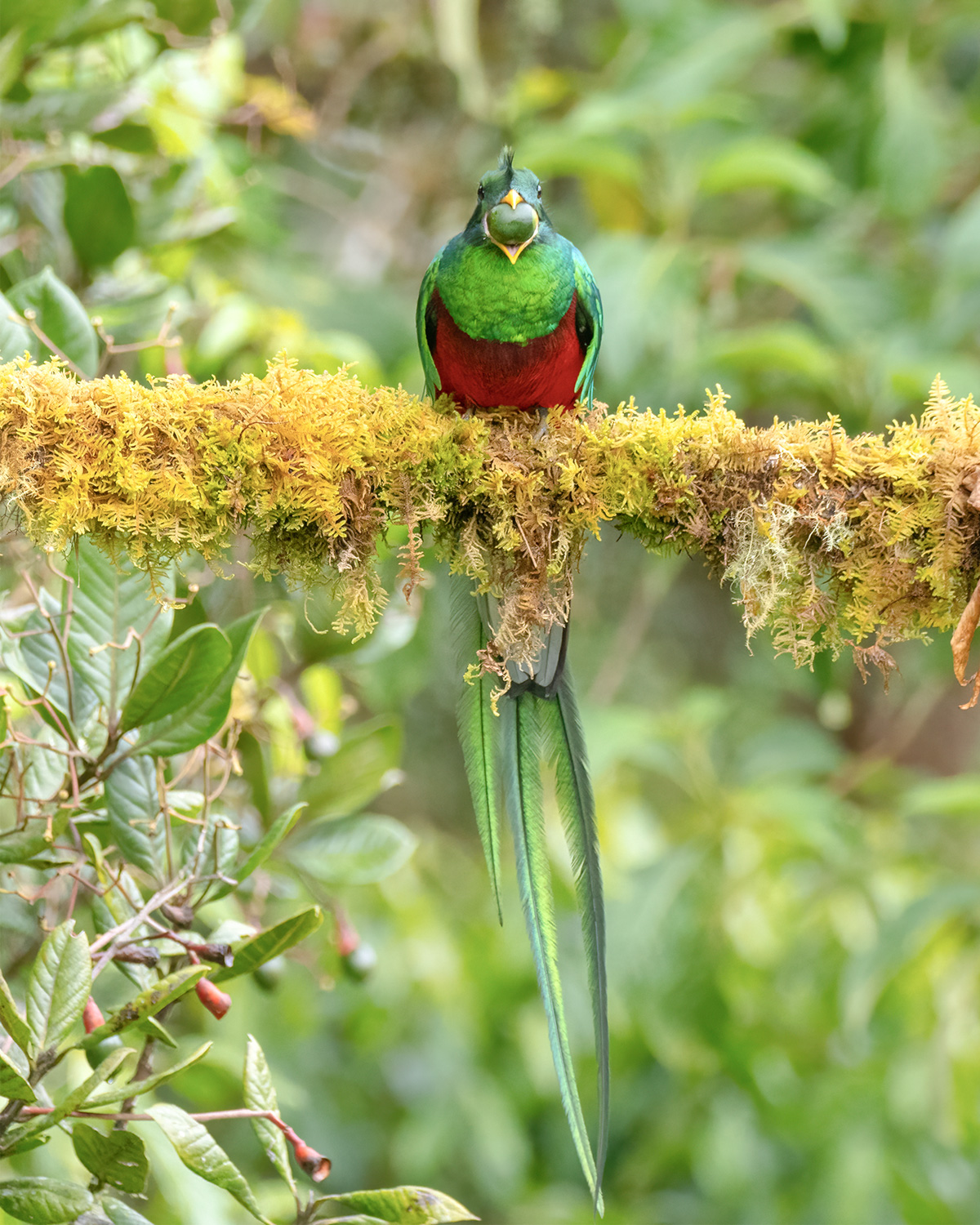
Resplendent Quetzal
Pharomachrus mocinno
Why photographers love this bird ?
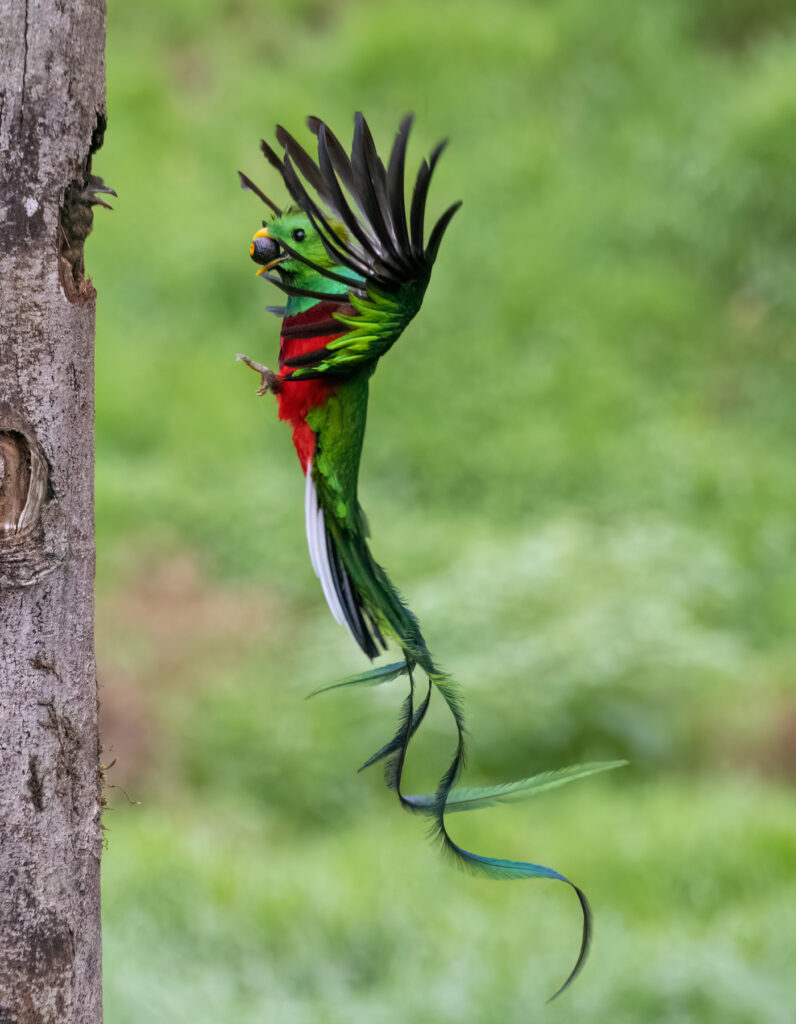
With its glowing emerald plumage, crimson belly, and spectacular flowing tail feathers, the Resplendent Quetzal is widely regarded as one of the most breathtaking birds in the Americas. Adult males can develop four elongated upper tail coverts — including two extraordinarily long ornamental feathers — creating an unforgettable silhouette that has fascinated birders and photographers for generations.
Where to find it ?
Mountainous cloud forest regions with abundant wild avocado trees provide ideal habitat for the Resplendent Quetzal, whose diet depends heavily on these fruits. San Gerardo de Dota and Monteverde are among the best locations in Costa Rica to observe and photograph this iconic species.
Best season
Resplendent Quetzals can be photographed year-round in Costa Rica, but April and May are especially rewarding during the breeding season, when males regularly bring food to the nest and offer exciting flight photography opportunities. After breeding, many males temporarily lose their long ornamental tail feathers, which gradually regrow over the following months.
Long-tailed males most common: November–May
Best period for flight photography: April–May
Shorter-tailed males more common: June–October
Insider Tips for Photographing Resplendent Quetzals
- Go with an experienced local guide to maximize observation and photography time.
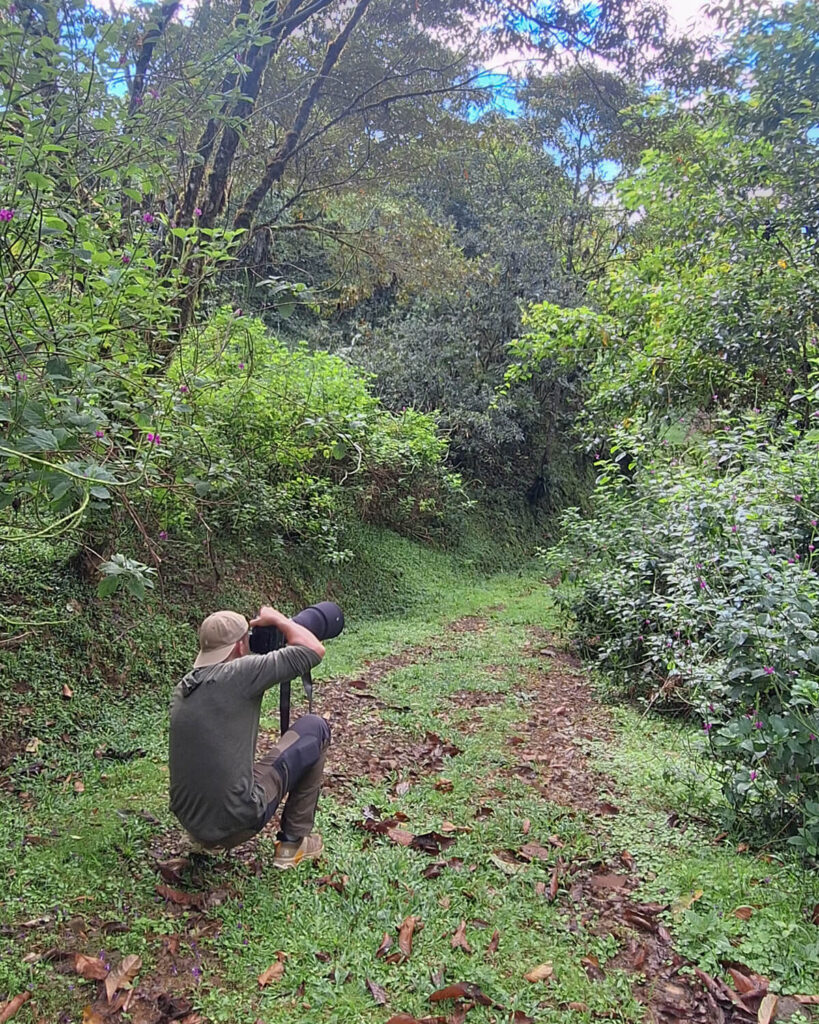
- Start very early for the best chances of active quetzal behavior.
- April–May offers the best opportunities for spectacular flight photography.
- Learn to recognize wild avocado trees — ripe fruit can attract quetzals at any momen
Keel-billed Toucan
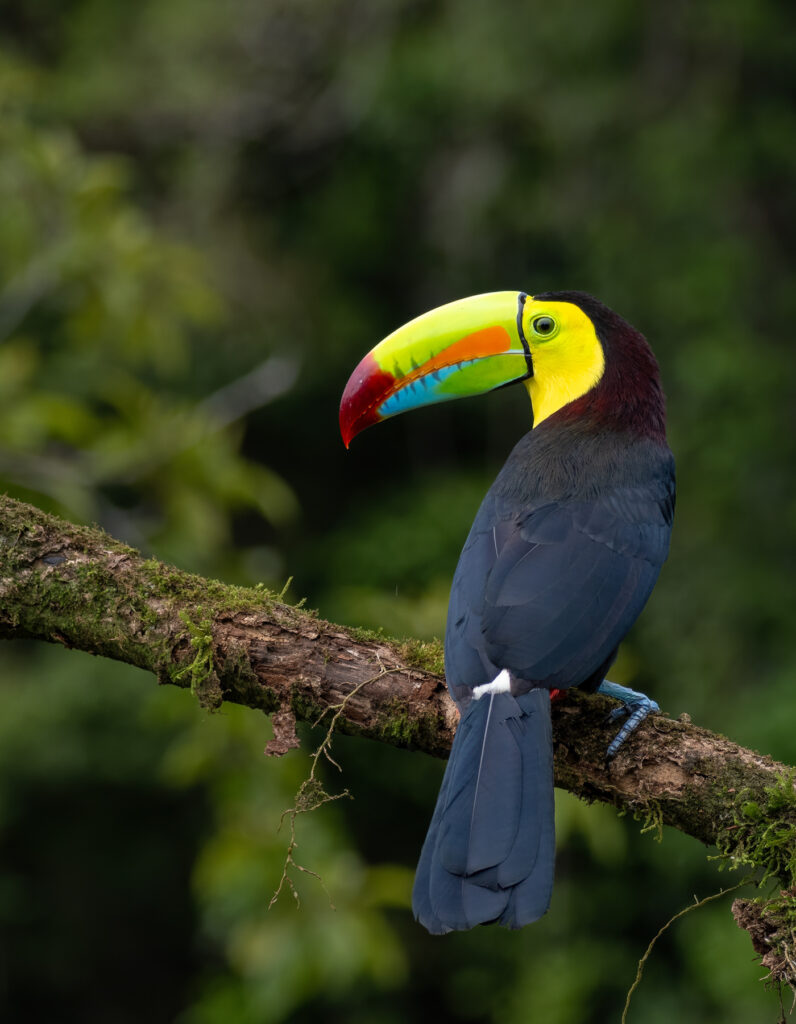
Ramphastos sulfuratus
Why photographers love this bird ?
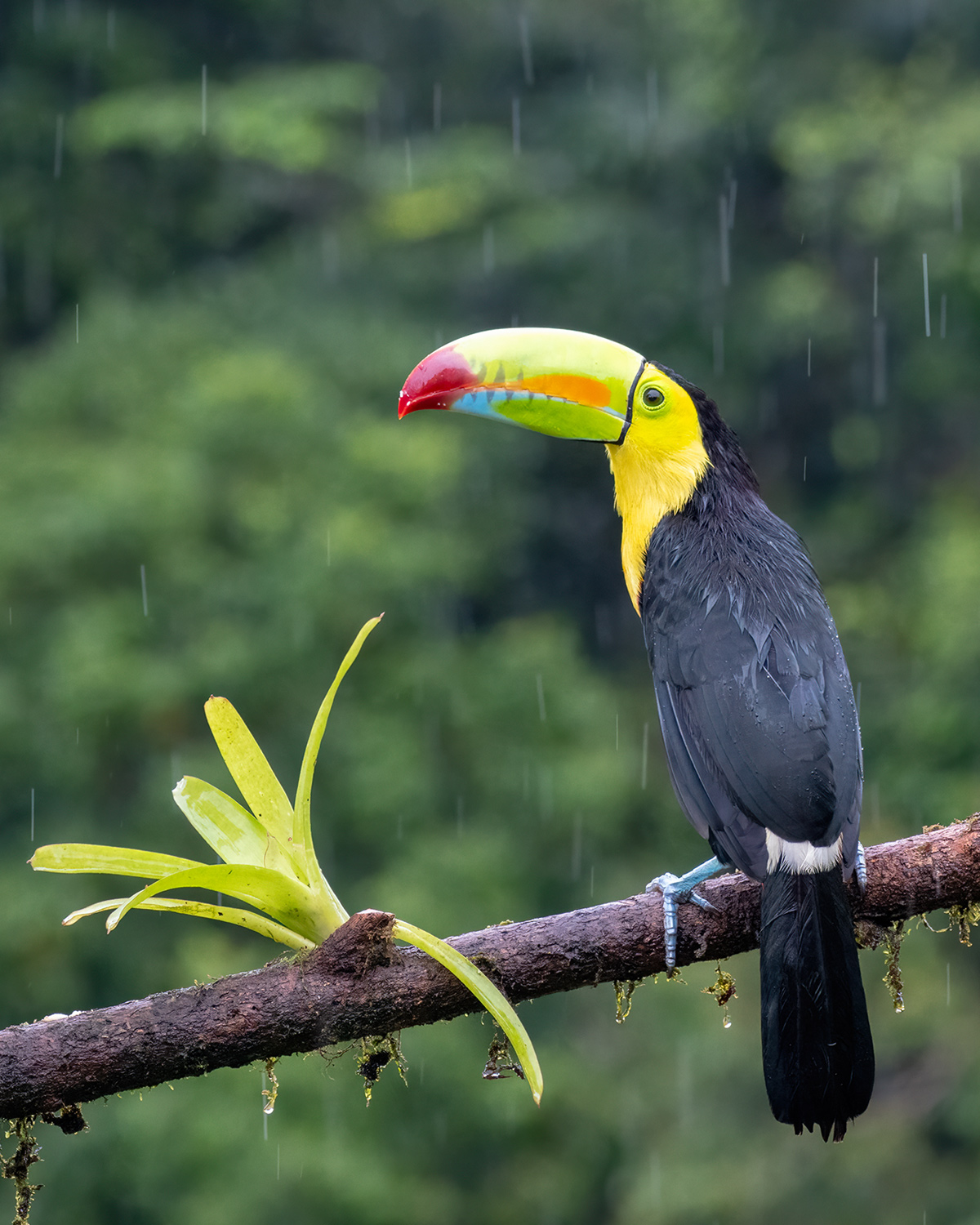
With its oversized rainbow-colored bill and vibrant tropical appearance, the Keel-billed Toucan is one of Costa Rica’s most iconic rainforest birds. Its striking colors, expressive poses, and photogenic perches make it a favorite subject among wildlife photographers.
Best place for find it ?
The Keel-billed Toucan is a characteristic bird of Costa Rica’s Caribbean lowlands and is regularly encountered wherever healthy rainforest remains. Top destinations for photography include Puerto Viejo de Sarapiquí, the Arenal area, and Boca Tapada.
Best season ?
The best photographic opportunities for Keel-billed Toucans are often at fruit feeders, where activity is generally highest from November through March. During other months, visits can become much less regular and may occasionally stop altogethe
Insider Tips for Photographing Keel-billed Toucan
- Be ready at first or last light for the best activity and best light conditions.
- Vocalizing toucans in nearby treetops can provide fantastic opportunities for video and action shots.
- Be patient — toucan activity can suddenly explode when least expected
- Don’t stop photographing during rain showers — wet toucans can make for spectacular rainforest images
Snowcap
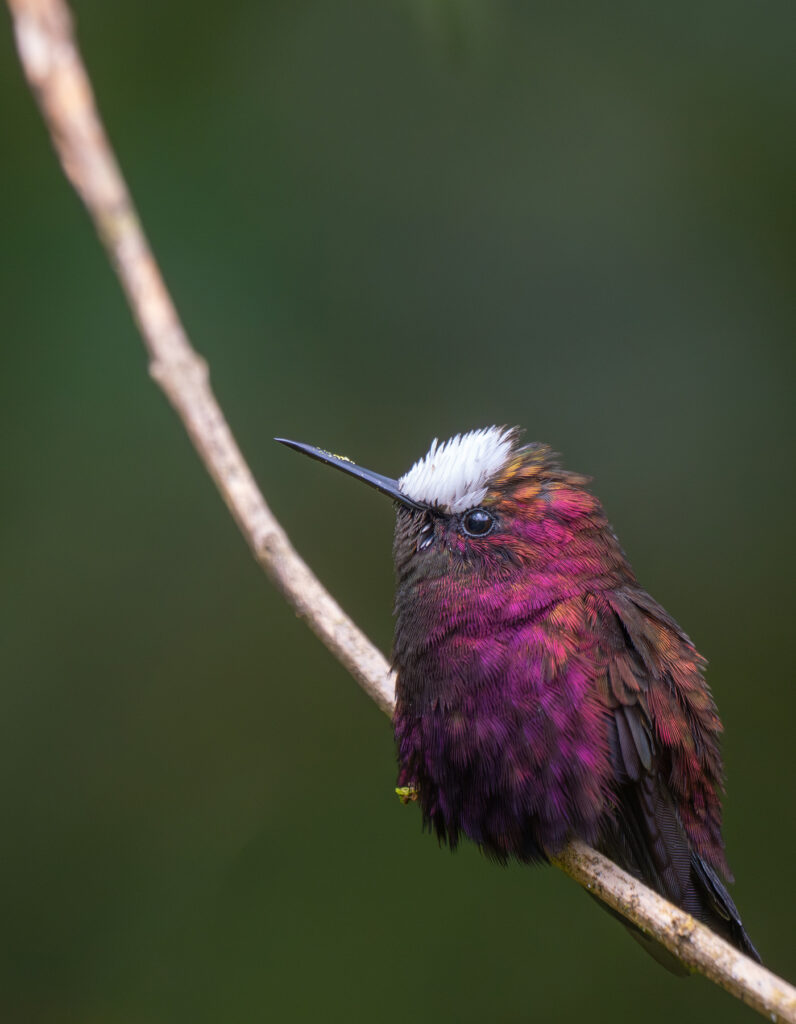
Microchera albocoronata
Why photographers love this bird ?
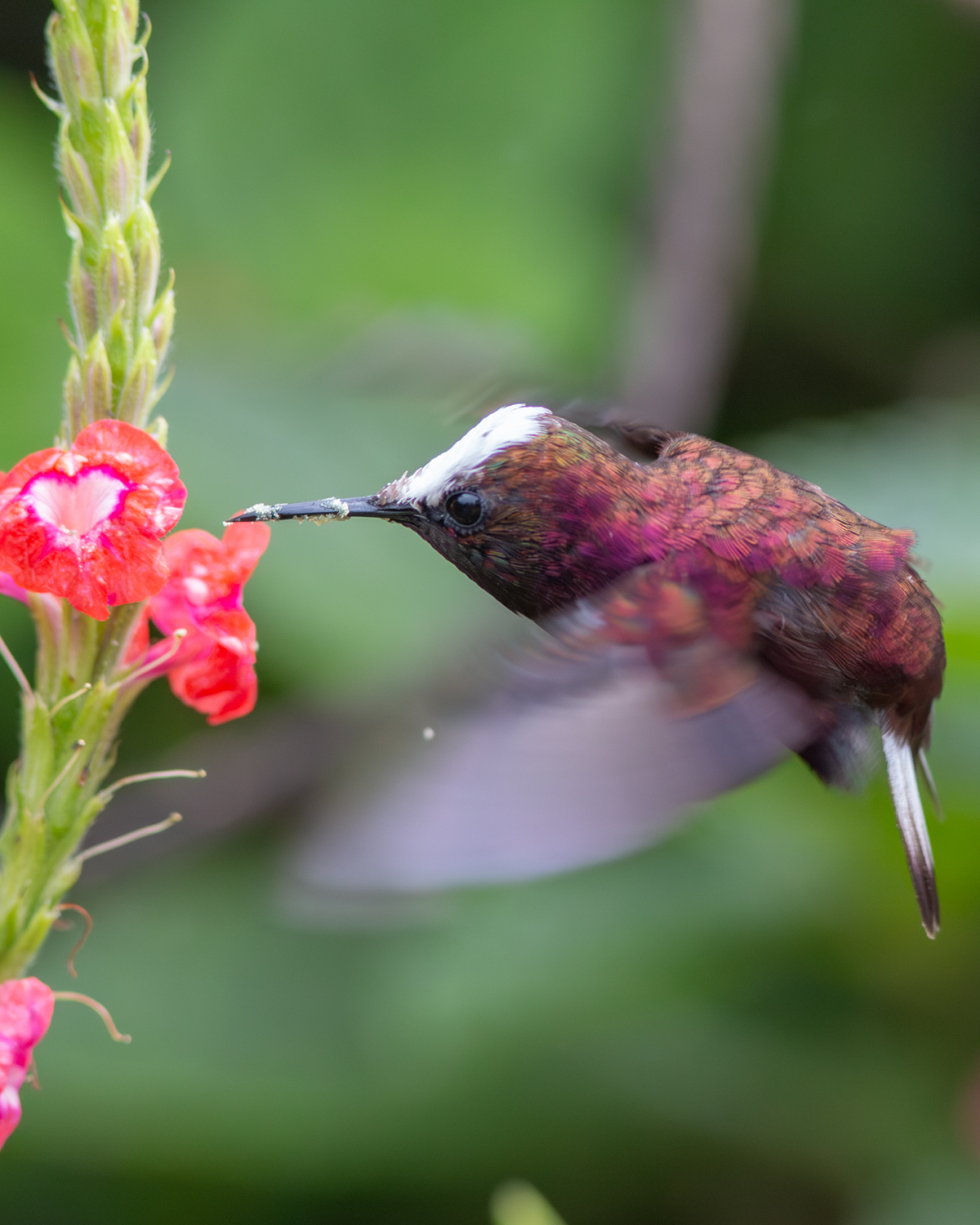
The Snowcap is one of Costa Rica’s most spectacular and unusual hummingbirds. The brilliant snow-white crown contrasts dramatically with the deep violet body, creating an unforgettable combination of colors packed into barely three grams of bird. Its rarity makes every encounter especially exciting for photographers.
Best place for find it ?
Snowcaps are scarce and often difficult to find due to their tiny size, preference for flowering treetops, and seasonal elevational movements following flower cycles. However, a few relatively reliable locations exist near Turrialba, Bijagua, and Puerto Viejo de Sarapiquí. Snowcap photography is regularly possible during our Costa Rica Endemics Tour
Best season ?
At reliable locations, Snowcaps can often be found throughout much of the year feeding on low Porterweed shrubs, allowing surprisingly good photography opportunities. However, they can disappear unexpectedly for several days and become especially attracted to flowering Mayo trees (Vochysia guatemalensis) during May.
Insider Tips for Photographing Snowcap
- Use fast shutter speeds (1/2000 or higher) and burst mode for hummingbird action photography
- Be patient and observe behavior carefully — anticipating repeated movements greatly improves success.
- Avoid harsh full sunlight, which can overexpose the brilliant white crown; cloudy conditions often produce better results.
King Vulture
Sarcoramphus papa
What is so special about this bird ?
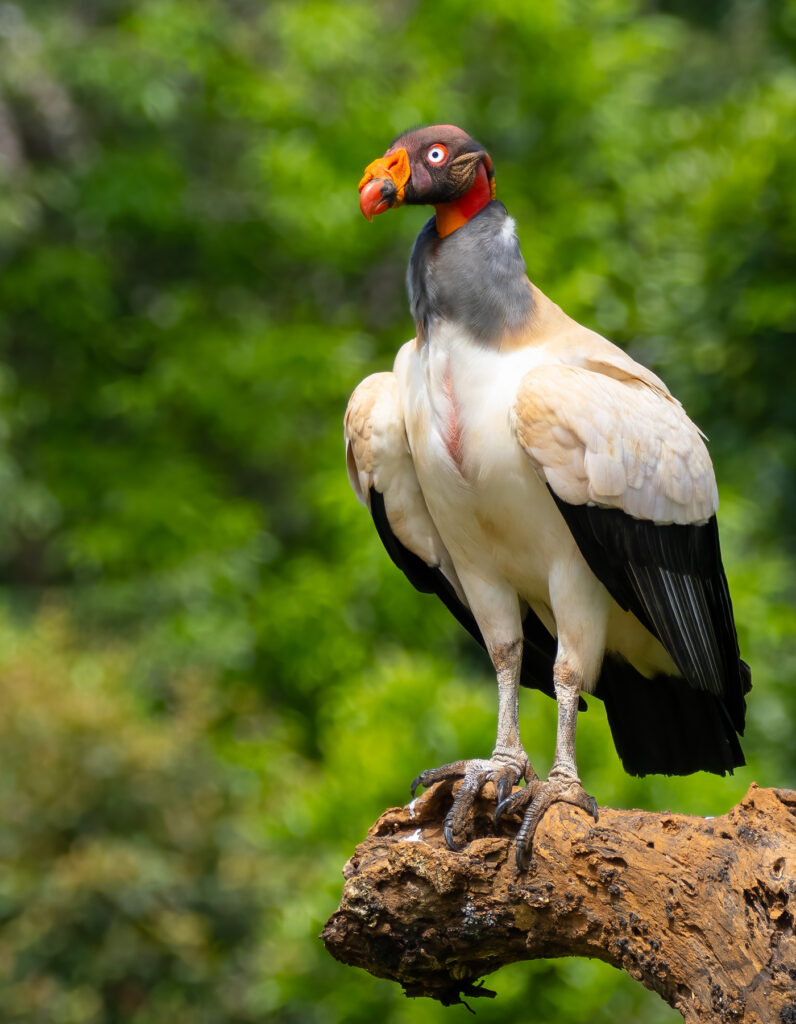
Photographing the magnificent King Vulture is always a memorable experience. Its spectacular orange, yellow, red, and purple head coloration makes it one of the rainforest’s most striking birds. Much larger and more dominant than the common Black Vulture, the King Vulture truly lives up to its name.
Our Nature Photography Tour includes exclusive access to a King Vulture hide, giving photographers an exceptional opportunity to capture close-up, high-quality images of this remarkable species.
Best place for King Vulture
The King Vulture can be found throughout the lowland regions of Costa Rica wherever large, intact areas of rainforest remain. Although the species is widespread, King Vultures are most often seen soaring high, which usually makes detailed photography very challenging.
The specialized King Vulture hide we offer in Boca Tapada, in northern Costa Rica, provides an exceptional opportunity to photograph this impressive bird at close range.
Best season ?
The King Vulture is most often seen soaring on hot, clear days when thermal currents lift the birds high above the rainforest. At our King Vulture hide, however, sightings are very consistent, and the species can be photographed almost every day of the year
Insider Tips for Photographing King Vulture
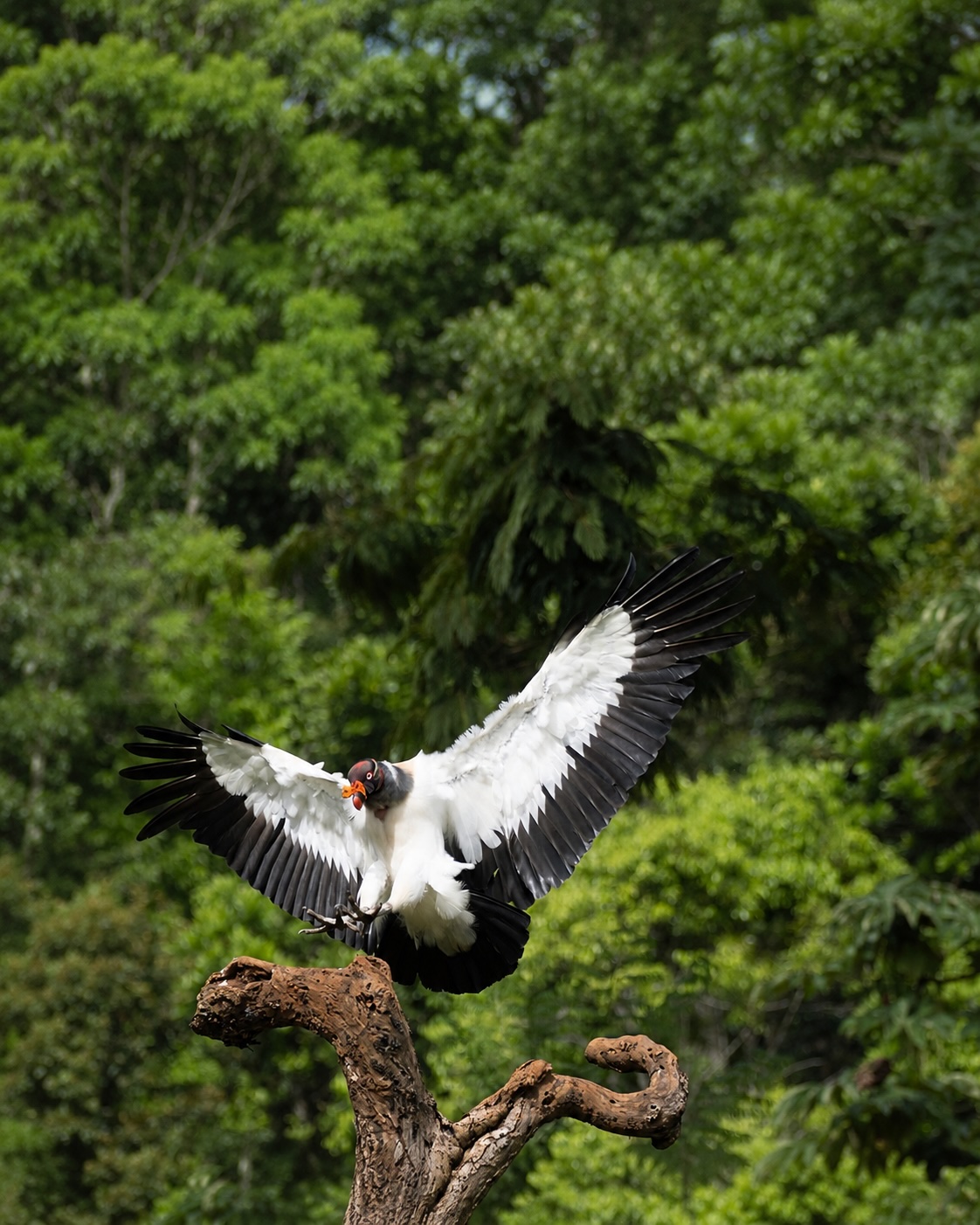
Photographing the King Vulture from the hide offers outstanding opportunities for close-up portraits, flight photography, and action shots. These insider tips will help you make the most of your time at the hide and improve your chances of capturing memorable images.
- Watch nearby perched King Vultures — they often fly down suddenly, creating excellent close-range flight shot opportunities
- Cloudy conditions are ideal, as strong sunlight can easily overexpose the bird’s white plumage.
- Bring plenty of water to the hide, since temperatures can become very hot during the day.
- Stay alert when multiple King Vultures arrive together — interactions often create spectacular action shots.
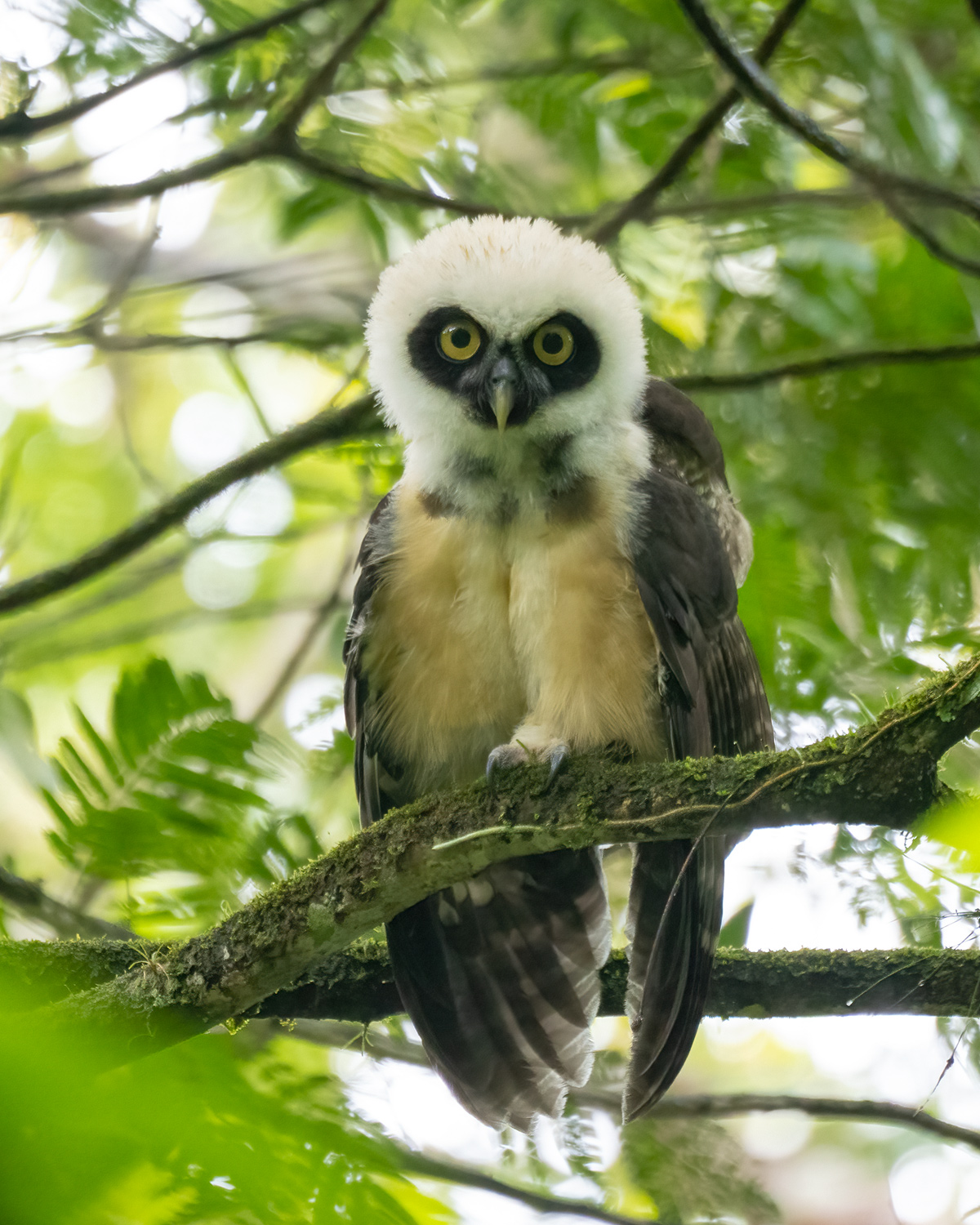
Spectacled Owl
Pulsatrix perspicillata
What is so special about Spectacled Owl ?
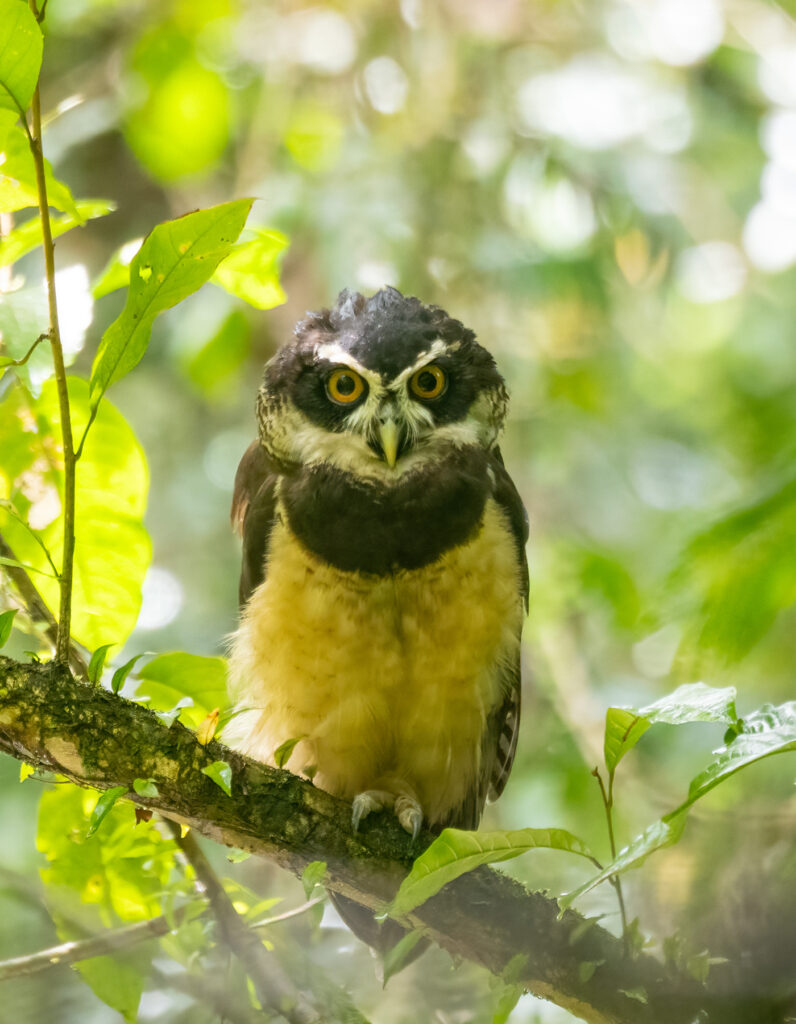
Photographing the elusive Spectacled Owl is always a thrilling experience. Hidden deep within dense rainforest, this mysterious species can be difficult to find, making every encounter feel special and rewarding. Our expert local guides closely monitor known territories and often know where to locate these impressive owls.
On our Easy Birding Tour, we offer a guided excursion to observe and photograph the Spectacled Owl, providing an excellent opportunity to encounter one of the largest owls in Costa Rica in its natural rainforest habitat.
Best place for Spectacled Owl ?
The elusive Spectacled Owl is most often found in dense primary rainforest and tropical dry forest. Despite its impressive size, this owl can be surprisingly difficult to locate, as it spends much of the day quietly hidden in thick vegetation. For this reason, experienced local guides are essential, carefully locating daytime roosts and approaching with great care to avoid disturbance, allowing rare opportunities to photograph the species in daylight. Some of the best areas in Costa Rica to look for Spectacled Owls include the Sarapiquí region, the Carara area, and the Osa Peninsula
Best season ?
The Spectacled Owl can be found year-round, as pairs usually remain within the same territory. During the nesting season, especially around March and April, the owls often become more secretive and harder to observe. However, with some luck, photographers may even encounter the striking snow-white chicks hidden in the rainforest vegetation.
Insider Tips for Photographing Spectacled Owl
- Use high ISO and/or a tripod or monopod, as light conditions inside the rainforest are often very low.
- Wear long sleeves and long pants to protect against mosquitoes in the forest interior.
- Never use flash, and always follow guide instructions — the owl’s well-being is the top priority
Costa Rica’s forests are alive with extraordinary birdlife, and these five species are just a glimpse of what makes this country one of the world’s top bird photography destinations. Whether it’s your first visit or your tenth, there is always something new waiting to be discovered through your lens.